

Top 5 Best Coffees to Buy in 2026
Table of Contents
- How We Evaluated the Best Coffees on This List
- Quick Comparison: Top 5 Best Coffees at a Glance
- 1. Ethiopia Natural - Best Specialty Single-Origin
- 2. Colombia - Best for Bright, Fruit-Forward Flavor
- 3. House Blend - Best for Everyday Consistency
- 4. Sumatra - Best for a Bold, Earthy Dark Roast
- 5. Guatemala - Best for Chocolate and Butterscotch Notes
- What Is the Difference Between Single Origin and Blend?
Last Updated: August 22, 2026
Finding the best coffees to buy feels straightforward until you're staring at a wall of bags with vague tasting notes and no real way to compare them. At CuppaCrave, we've tasted, sourced, and roasted our way through dozens of origins and blends to identify what actually belongs in your grinder. This guide covers the top 5 best coffees we carry, why each one earns its spot, and how to match them to your palate and brewing setup.
The best coffees are roasted fresh, sourced transparently, and matched to how you actually brew.
Quick Picks:
- Best Specialty Single-Origin: Ethiopia Natural, complex fruit-forward aromatics at medium-light roast
- Best Bright and Fruit-Forward: Colombia, washed process, vivid acidity, clean finish
- Best Everyday Consistency: House Blend, smooth, balanced, never disappoints
- Best Bold Dark Roast: Sumatra, syrupy body, earthy depth, long finish
- Best for Chocolate and Butterscotch: Guatemala, medium roast, layered sweetness
How We Evaluated the Best Coffees on This List
Every coffee on this list was assessed against consistent criteria drawn from specialty coffee evaluation practice. We prioritized origin and sourcing transparency, ensuring we know the grower, region, altitude, and processing method. Roast profile and freshness came second, all CuppaCrave coffees are roasted to order, so you're not buying stale beans. Freshly roasted whole bean coffee retains its aromatics, acidity, and body in ways that pre-ground or aged beans cannot (peer-reviewed research).

Flavor complexity and sensory analysis used the same categories in professional cupping, the standardized sensory analysis process that the Specialty Coffee Association's cupping protocols uses to score specialty-grade beans. We also considered processing method and altitude: washed process coffees produce cleaner, brighter cups; natural and honey process coffees add fruit complexity and sweetness; higher-grown arabica beans generally produce more nuanced flavor profiles. Finally, we assessed brewing versatility, the best coffees should perform well across multiple methods, whether you're pulling espresso, using a pour-over, or running a French press.
Quick Comparison: Top 5 Best Coffees at a Glance
| Coffee | Roast Level | Process | Tasting Notes | Best Brewing Method | Price |
|---|---|---|---|---|---|
| Ethiopia Natural | Med-Light | Full Natural | Milk chocolate, fruity, caramel | Pour-over, AeroPress | $21.99 |
| Colombia | Medium | Fully Washed | Dried orange, berry, chocolate | Pour-over, drip | $21.99 |
| House Blend | Medium | Natural + Washed | Nutty, sweet chocolate, mild citrus | Drip, espresso | $21.99 |
| Sumatra | Medium-Dark | Wet-Hulled | Dark chocolate, dried fruit, earthy | French press, espresso | $21.99 |
| Guatemala | Medium | Fully Washed | Dark chocolate, bright fruit, butterscotch | Drip, pour-over | $21.99 |
1. Ethiopia Natural - Best Specialty Single-Origin
Ethiopia Natural is the best single-origin coffee on this list. Ethiopia is widely regarded as the birthplace of coffee, and the Sidama zone produces some of the most complex specialty coffee in the world.
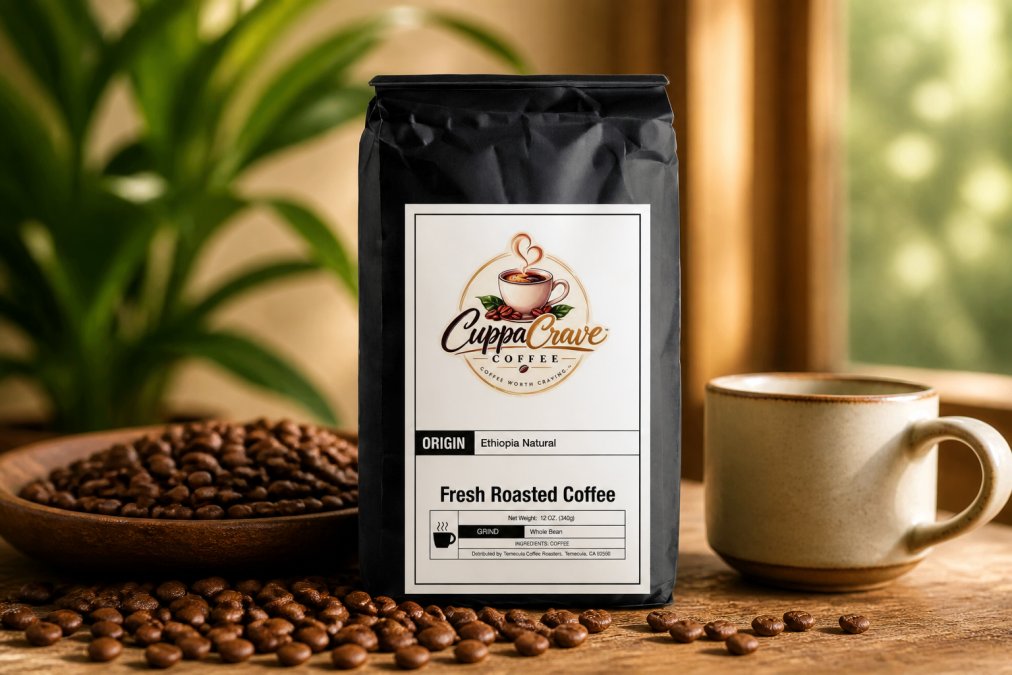
CuppaCrave's Ethiopia Natural comes from smallholder farmers in the Sidama zone, grown at 1700-1900 metres on nitisol soil using indigenous heirloom cultivars. This altitude concentrates sugars and organic acids that translate directly into flavor complexity. The full natural process, where the coffee cherry dries whole on raised beds with the fruit intact, transfers fruit sugars into the bean and produces the milk chocolate, fruity, and caramel tasting notes this coffee is known for.
The roast is medium-light, which preserves the delicate aromatics that make this origin exceptional. At this roast level, the sweetness and aroma come through cleanly, with a lighter mouthfeel but far more interesting than a dark roast.
What most guides miss: Natural process coffees from Ethiopia often taste fermented when brewed at the wrong temperature (sca.coffee). Brew between 90-93°C and use a pour-over or AeroPress for the cleanest extraction.
Best for: Specialty coffee drinkers who want to taste what single-origin coffee is actually capable of.
One honest limitation: This coffee's complexity can read as unusual to drinkers accustomed to dark roasts. If you're new to light-roast specialty coffee, expect a learning curve.
2. Colombia - Best for Bright, Fruit-Forward Flavor
Bright acidity is either exactly what you want in a coffee or the thing you're trying to avoid. For drinkers who want it, Colombia is the pick.
CuppaCrave's Colombia comes from smallholder farmers in Medellin, Antioquia, grown at 1300-1500 metres on volcanic loam soil. The variety mix of Castillo, Caturra, Colombia, and Typica is a classic Andean lineup. The fully washed process produces the clean, transparent flavor profile that Colombia is famous for: dried orange, berry, and chocolate, with a finish that doesn't linger muddily.
Washed process coffees let the bean's inherent character speak without the added fruit sweetness of a natural process. The acidity here is lively but not aggressive, balanced by a medium body and a chocolate note in the aftertaste that softens the finish.
Best brewing method: Pour-over or drip. Use a 1:15 to 1:16 coffee-to-water ratio by weight, medium-fine grind for pour-over, medium for drip. A 30-second bloom before full extraction helps release CO2 and improves extraction evenness.
Best for: Drinkers who want a classic specialty coffee experience, bright and clean, without the fermented or wine-like notes of a natural process.
3. House Blend - Best for Everyday Consistency
Single-origin coffees are exciting. A well-built house blend is dependable in a way that single origins rarely are, and dependability has real value when you're brewing every morning without thinking about it.
CuppaCrave's House Blend is a medium roast blend of select coffees from Central and South America with tasting notes of nutty, sweet chocolate, mild citrus, and a clean bright finish. It uses both natural and washed process coffees, combining the sweetness of the natural process with the clarity of the washed process. The result is a smooth, balanced, and consistent cup across batches.
Blends are built to be reproducible. When one origin has an off-season or variable harvest, the roaster can adjust sourcing without changing the cup profile. The House Blend also performs well as espresso, where the blend's body and sweetness hold up under pressure and pair naturally with milk.
Best for: Home brewers who want a quality everyday coffee that works across multiple brewing methods without adjustment.
If you're not sure where to start, the Best Sellers Sample Pack at $24.99 includes the House Blend alongside five other roasts in 2oz trial sizes.

4. Sumatra - Best for a Bold, Earthy Dark Roast
Most dark roasts are dark because roasting longer covers up sourcing flaws. Sumatra is different: the earthy, syrupy character comes from the origin and processing method, not from over-roasting.
CuppaCrave's Sumatra comes from the Aceh region, Takengon, sourced through the Koperasi Baitul Qiradh Baburrayyan cooperative, grown at 1100-1600 metres. The varietals, Tim Tim, Typica, Ateng, Onan Ganjang, and Jember, are traditional Indonesian arabica types with naturally low acidity and dense body. The processing method is Giling Basah, or wet-hulling, which is unique to Indonesia. The coffee is hulled at high moisture content, producing the characteristic earthy, herbal, and full-bodied flavor profile that Sumatra is known for globally.
The cupping notes are specific: medium acidity, syrupy body, dark chocolate, dried fruit, earthy, and a long lingering finish. That syrupy mouthfeel is the signature of wet-hulled Indonesian coffees, and it's something no other processing method replicates.
Best brewing method: French press or espresso. The syrupy body and low acidity suit immersion brewing. For espresso, this Sumatra pulls a thick, low-acid shot that works well as a standalone or in milk-based drinks. Grind slightly coarser than you would for other dark roasts to avoid over-extraction.
5. Guatemala - Best for Chocolate and Butterscotch Notes
Guatemala Antigua is one of the most consistent specialty coffee origins in the world. The combination of volcanic soil, high altitude, and cool climate produces a cup that reliably delivers dark chocolate, bright fruit, and butterscotch.
CuppaCrave's Guatemala comes from smallholder farmers in Antigua, grown at 1200-1616 metres on volcanic loam soil. The variety mix of Bourbon, Catuai, Caturra, and Typica is a classic Guatemalan lineup. The fully washed and sun-dried process keeps the cup clean and lets the origin's natural sweetness come through without fermentation influence.
The tasting profile of dark chocolate, bright fruit, and butterscotch is a genuine description of what's in the cup. The chocolate note is the dominant characteristic, with fruit acidity adding brightness and butterscotch appearing in the finish as a sweet, rounded aftertaste. The body sits in the medium range, making this coffee approachable without being thin.
Best for: Drinkers who want a medium roast with clear sweetness and chocolate character, without the heavy body of a dark roast or the sharp acidity of a light roast.
If you want to try Guatemala alongside other single origins before committing to a full bag, the Single Origin Favorites Sample Pack at $24.99 is the practical way to do it.

What Is the Difference Between Single Origin and Blend?
Single-origin coffee is sourced from a single farm, cooperative, or defined region, where the flavor profile reflects the specific conditions of that place: altitude, soil, climate, variety, and processing method. A blend is a combination of coffees from two or more origins, constructed to achieve a consistent, balanced flavor profile that no single origin would produce on its own.
Single-origin coffees are better for drinkers who want to taste the specific character of a place. That specificity is the point, and single origins tend to be traceable: you can often identify the grower, cooperative, and processing details, which matters for drinkers who prioritize ethical sourcing and direct trade transparency.
Blends are better for consistency and versatility. A skilled roaster builds a blend to hit specific flavor targets across every batch, regardless of seasonal variation in individual origins. House blends are also typically designed to perform across multiple brewing methods, making them more forgiving for everyday use.
Neither is objectively better. A common mistake is assuming that single-origin means higher quality. Some of the best coffees in the world are blends. The question is what you want from the cup.
| Factor | Single Origin | Blend |
|---|---|---|
| Flavor traceability | High, reflects specific origin | Low, combined profile |
| Batch consistency | Variable by season | High, adjustable by roaster |
| Sourcing transparency | Typically high | Varies by roaster |
| Best for | Exploration, tasting notes | Everyday brewing, espresso |
| Complexity | Origin-specific | Constructed balance |
How to Store Coffee Beans for Freshness
Proper storage is where most home brewers lose the quality they paid for. Freshly roasted whole bean coffee starts losing aromatics within days of roasting if stored incorrectly.
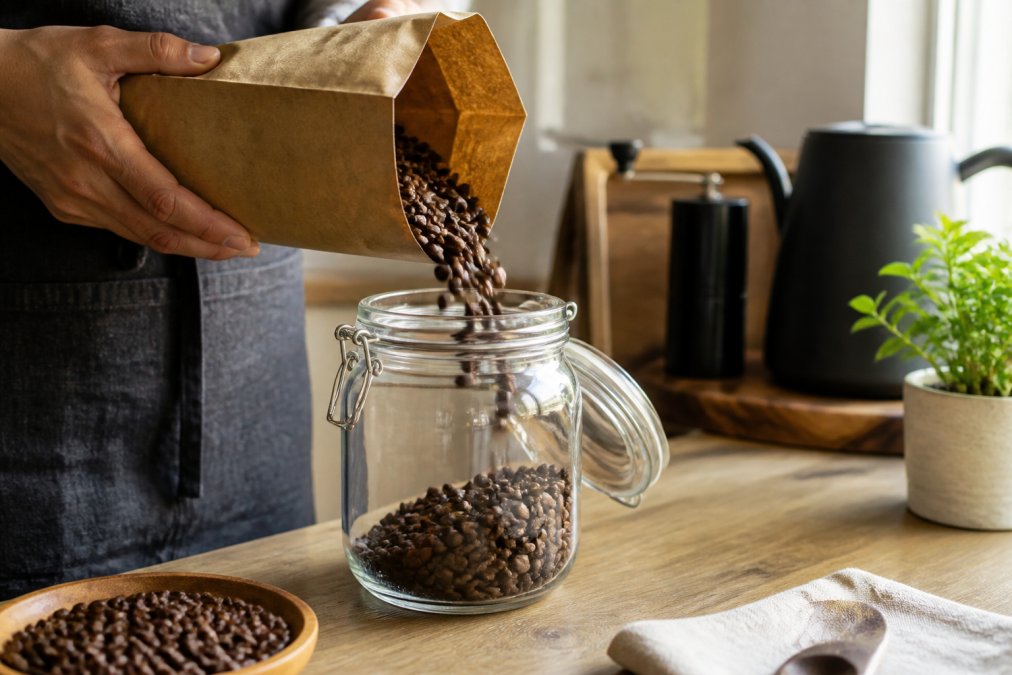
The four enemies of fresh coffee are oxygen, moisture, heat, and light. Store beans in an airtight container at room temperature, away from heat sources and direct sunlight. Do not refrigerate whole beans; condensation introduces moisture on every open-close cycle. Freeze only if storing for longer than three weeks, in a sealed, portioned bag you won't reopen until use. Buy in quantities you'll use within two to three weeks of the roast date, and grind only what you need immediately before brewing.
The roast date matters more than the "best by" date. Freshly roasted coffee needs 2-5 days to off-gas CO2 before it brews optimally, but the quality window closes quickly after that. Most specialty coffee is at its best between 5 and 21 days post-roast, depending on the roast level and origin.
Signs of stale coffee beans include a flat, dusty, or cardboard-like aroma rather than a sharp, sweet smell; beans that look dull without the natural sheen of fresh roast; no bloom when you add hot water to grounds; and a thin, flat cup with no aftertaste or complexity.
A Note on Brewing Ratios and Grind Size
Brewing method is the variable most guides undervalue when discussing the best coffees. The same bean brewed at the wrong ratio or grind size will taste like a different coffee entirely.
A general starting framework:
| Brewing Method | Coffee-to-Water Ratio | Grind Size | Brew Time |
|---|---|---|---|
| Pour-over | 1:15 by weight | Medium-fine | 3-4 minutes |
| French press | 1:12 by weight | Coarse | 4 minutes |
| Drip machine | 1:16 by weight | Medium | 5-6 minutes |
| AeroPress | 1:12 by weight | Medium-fine | 2-3 minutes |
| Espresso | 1:2 by weight | Fine | 25-30 seconds |
These are starting points, not fixed rules. Grind finer if the cup tastes weak or sour; grind coarser if it tastes bitter or harsh. Water temperature should sit between 90-96°C for most coffees, with lighter roasts benefiting from the higher end and darker roasts from the lower end.
The bloom step, adding a small amount of hot water to saturate the grounds before full extraction, matters most for freshly roasted coffee. Fresh beans release significant CO2, and a 30-45 second bloom lets that gas escape before extraction begins, producing a more even and flavorful cup. If your coffee doesn't bloom noticeably, that's one of the clearest signs of stale coffee beans.
Frequently Asked Questions
How can you tell if coffee beans are fresh?
Fresh whole bean coffee releases a strong, pleasant aroma the moment you open the bag. When you grind freshly roasted beans, the grounds bloom noticeably during brewing as trapped CO2 escapes. Dull, flat-smelling beans with no bloom are a clear sign the coffee has passed its peak. Most specialty roasters recommend brewing within 2 to 4 weeks of the roast date for the best flavor complexity and aroma.
What is the difference between single origin and blend coffee?
Single-origin coffee comes from one specific farm, cooperative, or region, which means the tasting notes reflect that location's unique altitude, soil, and processing method. A blend combines beans from multiple origins to create a consistent, balanced flavor profile year-round. Single-origin coffees suit drinkers who enjoy exploring distinct flavor complexity, while blends are ideal for those who want a reliable, smooth cup every time.
Does roast date matter for coffee quality?
Yes, roast date is one of the most important indicators of coffee quality. Freshly roasted beans are at peak flavor between 4 and 21 days after roasting. After that, oxidation gradually dulls the acidity, sweetness, and aroma. Many specialty coffees list a roast date rather than a best-before date so you can judge freshness accurately. Buying roasted-to-order coffee, as CuppaCrave does, removes the guesswork entirely.
How should I store my coffee to keep it fresh?
Store whole bean coffee in an airtight container away from light, heat, and moisture. A dark cupboard at room temperature works well. Avoid the refrigerator, where condensation introduces moisture with every opening. Freezing is acceptable for long-term storage only if the bag is fully sealed and you thaw it once without refreezing. Buying in smaller quantities more often is the most reliable way to ensure every cup is freshly roasted.
Are 3-year-old coffee beans still good to drink?
Three-year-old coffee beans are safe to drink but will taste significantly flat. The oils that carry aroma and flavor complexity degrade within weeks of roasting, and by three years most of what made the coffee interesting is gone. You will notice almost no bloom during brewing, a stale or cardboard-like smell, and very little sweetness or acidity in the cup. For specialty coffee, freshness within a month of roasting makes the biggest difference.
CuppaCrave sources beans from trusted farms across Ethiopia, Colombia, Guatemala, Sumatra, and beyond, roasting each order fresh to preserve the flavor complexity that makes specialty coffee worth drinking. Explore the full range, or start with the Single Origin Favorites Sample Pack to find your preferred profile before committing to a full bag. Get started with CuppaCrave and taste the difference that roasted-to-order freshness actually makes.
This article was written using GrandRanker