

Signs of Stale Coffee Beans: A 2026 Guide
Table of Contents
- What Stale Coffee Beans Actually Taste and Smell Like
- Visual and Physical Signs of Stale Coffee Beans
- The Bloom Test: A Practical Freshness Check
- How Long Do Coffee Beans Stay Fresh?
- Coffee Roast Date vs Expiration Date: What to Look For
- The Best Way to Store Coffee Beans for Lasting Freshness
- What to Do With Stale Beans: Upcycling Instead of Wasting
- Conclusion
What Stale Coffee Beans Actually Taste and Smell Like
Stale coffee beans have lost their volatile aromatic compounds through oxidation, degassing, and exposure to air, moisture, heat, or light, resulting in a flat, lifeless cup. At CuppaCrave, we emphasize freshness because it separates an extraordinary cup from a forgettable one.
Most people cannot identify what they are tasting when coffee goes wrong. They assume low quality or poor brewing technique, when the culprit is simply age.
Here is what stale coffee beans actually tell you when you drink them.
Flat, Musty, and Cardboard: Decoding Off-Flavors
Fresh coffee carries brightness, sweetness, and layered tasting notes. When beans go stale, those characteristics collapse into bitterness without balance and a hollow, papery finish that many describe as cardboard.
The musty quality comes from oxidation breaking down the oils and aromatic compounds inside the bean. Rancid beans produce an unpleasant, almost sour or greasy note that no extraction method will fix. Bitterness intensifies as acidity disappears, since acidity fades first.
Freshly roasted coffee has between 800 and 1,000 distinct chemical compounds contributing to aroma and flavor. Staleness does not just reduce their quantity, it changes their character entirely.
How Aroma Loss Signals a Stale Bag
Open a bag of freshly roasted beans and the aroma hits immediately: rich, complex, sometimes fruity or floral. Open a bag of stale beans and the smell is muted, faintly dusty, or absent.
Aroma is the fastest freshness indicator most people overlook. Carbon dioxide released during roasting carries much of that aromatic intensity. As beans degas over time, they lose CO2 and a significant portion of their sensory complexity. A bag that smells like almost nothing tells you exactly what the cup will taste like.
Visual and Physical Signs of Stale Coffee Beans
You can often identify stale coffee beans before brewing. The visual and physical cues are reliable once you know what to look for.
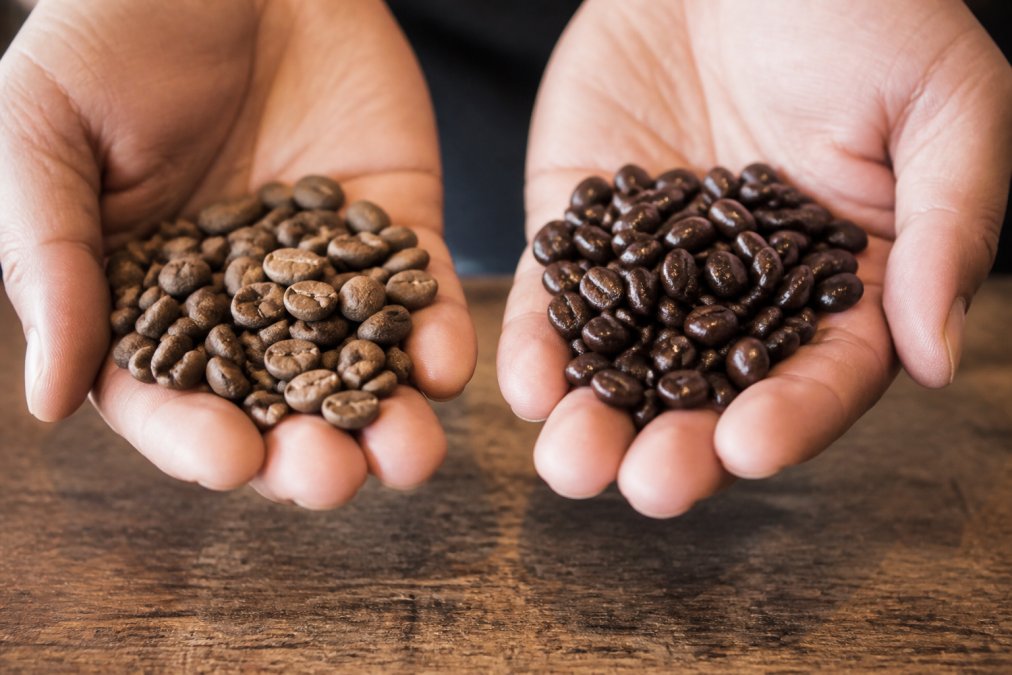
Surface Oils and Sheen: What They Tell You
Freshly roasted dark roast beans often display visible surface oils, signaling that internal oils have migrated during roasting. Medium and light roasts show subtler sheen, but healthy beans still have luster.
Stale beans look dull. The oils have dried out or oxidized, leaving a matte, chalky surface. When combined with flat aroma and no bloom during brewing, this confirms staleness.
Extremely oily dark roast beans that have sat for weeks are not fresher for having more oil. Excess surface oil on aged beans often signals rancidity, not freshness.
Color, Texture, and Visible Mold
Fresh beans have consistent color appropriate to their roast level with no blotchy patches. Stale beans may look faded or uneven. In high-humidity storage, visible mold can develop as white or grey fuzzy patches.
Texture also changes. Fresh beans feel firm and dense. Stale beans feel lighter, more brittle, and sometimes chalky. Any visible mold is an immediate discard, it can produce compounds that survive brewing.
The Bloom Test: A Practical Freshness Check
The bloom test is the most reliable at-home method for confirming whether coffee beans are genuinely fresh. When you pour hot water over freshly ground coffee, residual carbon dioxide escapes rapidly, creating visible bubbling and swelling called the bloom.
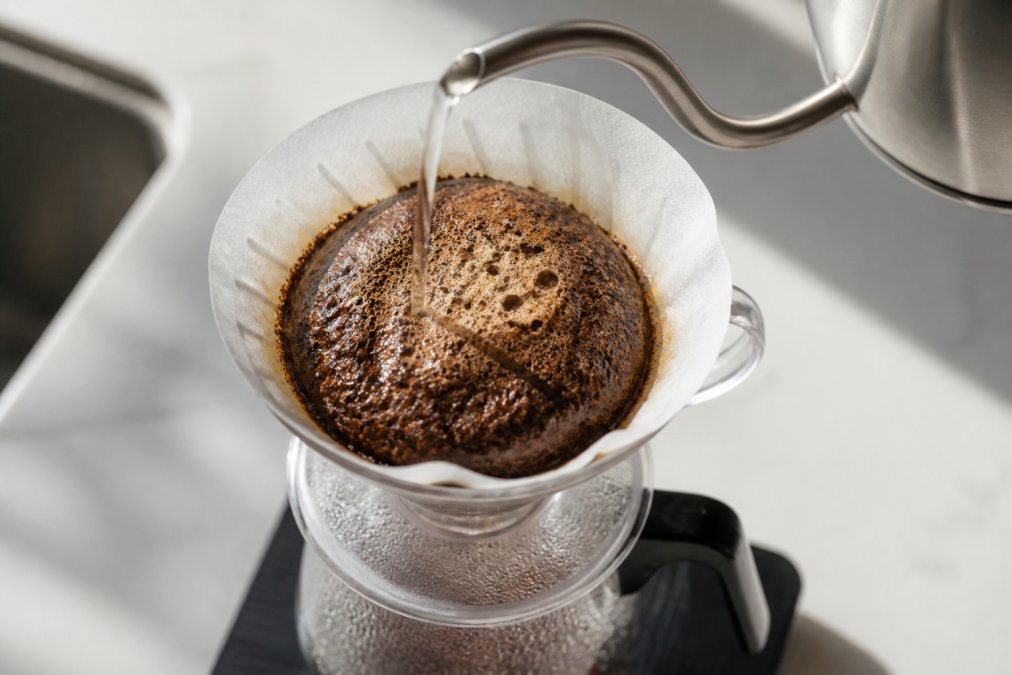
Fresh beans bloom dramatically. The grounds puff up, bubble, and expand within seconds of water contact. Stale beans produce little to no bloom because CO2 has already escaped during storage. If grounds simply sit flat and inert, the beans have lost most freshness.
How to run the bloom test:
- Grind your beans fresh, immediately before testing
- Add grounds to your pour-over dripper or cup
- Pour just enough hot water to saturate the grounds (roughly twice the weight of the coffee)
- Wait 30-45 seconds and observe
- Significant bubbling and swelling means fresh; flat grounds mean stale
How Long Do Coffee Beans Stay Fresh?
Whole, unground beans stored correctly in an airtight container away from light and heat remain at peak quality for roughly two to four weeks after the roast date. Quality declines gradually after that, but the difference is noticeable.
The roast date matters, not the "best by" date.
Whole Beans vs. Ground Coffee: Shelf Life Compared
| Form | Peak Freshness Window | Acceptable Range | Main Risk |
|---|---|---|---|
| Whole beans (sealed) | 2-4 weeks post-roast | Up to 6-8 weeks | Oxidation, aroma loss |
| Whole beans (opened) | 1-2 weeks | Up to 4 weeks | Moisture, air exposure |
| Ground coffee (sealed) | 1-2 weeks post-grind | Up to 3 weeks | Rapid degassing, oxidation |
| Ground coffee (opened) | 3-5 days | Up to 1 week | Moisture, rapid staling |
Ground coffee stales significantly faster than whole beans. Grinding dramatically increases surface area, exposing more of the bean's interior to air and accelerating oxidation. Grinding immediately before brewing is a practical freshness strategy.
According to the Specialty Coffee Association's guidance on coffee freshness, coffee is best consumed within a specific window after roasting, with proper storage as the primary variable within consumer control.
How Roast Level and Varietal Affect Aging
Dark roasts degas faster because roasting drives out more moisture and CO2, leaving the bean more porous and vulnerable to oxidation. A dark roast may hit peak flavor within days, then decline faster than a light roast.
Light roasts retain more original character and degas more slowly, often performing well up to four or five weeks post-roast when stored correctly.
Dense, high-altitude beans common in Ethiopian and Colombian single-origins age more gracefully than lower-density beans. Naturally processed beans, which retain more fruit sugars, can develop interesting complexity early but carry more oils that turn rancid faster under poor storage.
Coffee Roast Date vs Expiration Date: What to Look For
The roast date tells you when beans were roasted. The expiration date tells you when the manufacturer considers the product unsafe, which for shelf-stable coffee can be a year or more after roasting.
A bag with a "best by" date twelve months away is not fresh coffee, it is coffee packaged to survive distribution and retail shelf life.
What to look for on a bag:
- Roast date: The most important number. Look for beans roasted within the past two to four weeks.
- One-way valve: Allows CO2 to escape without letting oxygen in, signaling freshness focus.
- Vacuum-sealed packaging: Reduces oxygen exposure during transit and storage.
- No roast date listed: A red flag indicating the roaster is not confident in freshness.
According to the National Coffee Association's guide to coffee freshness and storage, understanding the difference between roast date and shelf life is foundational to buying genuinely fresh coffee.
CuppaCrave roasts to order, so the roast date on your bag reflects when your beans were actually processed.
The Best Way to Store Coffee Beans for Lasting Freshness
Proper storage is the single biggest variable you control after buying beans. Even the freshest, highest-quality beans will stale quickly under poor conditions. Store coffee beans in an airtight, opaque container at room temperature, away from heat sources, kept sealed between uses.
Choosing the Right Storage Container
The storage container matters significantly. Key properties to look for:
- Airtight seal: Prevents oxygen from reaching beans between uses
- Opaque material: Blocks light, which degrades aromatic compounds
- One-way valve (optional): Allows residual CO2 to escape without admitting air
- Appropriate size: A container too large leaves excess air in contact with beans
Ceramic and stainless steel containers with airtight lids are consistently reliable. Clear glass jars expose beans to light. Avoid storing beans in the original bag once opened unless it has a resealable airtight closure and one-way valve.
Freezing whole beans in a completely airtight, vacuum-sealed container can extend shelf life, provided beans are allowed to reach room temperature before opening and grinding. The risk is condensation, which introduces moisture and accelerates staleness.
Light, Heat, Moisture, and Air: The Four Enemies
These four factors drive coffee staleness.
Oxidation from air is the primary culprit. Oxygen reacts with oils and aromatic compounds, breaking them into less complex molecules. Every time you open your container, you introduce fresh oxygen.
Heat accelerates oxidation. Storing beans near a stove, oven, or sunny windowsill dramatically shortens useful life. Room temperature in a cool kitchen is the target.
Moisture and humidity are particularly dangerous. Coffee is hygroscopic and absorbs moisture from the environment. Moisture triggers mold growth and accelerates flavor compound breakdown. Never store beans in the refrigerator without an airtight seal.
Light exposure, especially direct sunlight, degrades volatile compounds responsible for aroma and flavor. An opaque container solves this completely.
According to food science research on coffee oxidation and storage from the Institute of Food Technologists, controlling oxygen and moisture exposure are the two most impactful interventions for extending coffee freshness.
What to Do With Stale Beans: Upcycling Instead of Wasting
Stale coffee beans do not have to be discarded. The flavor may be past its best for quality brewing, but the beans retain useful properties.
Cold brew: Cold brewing is more forgiving of older beans than hot methods. Slow extraction at low temperatures can pull reasonable flavor from beans that would taste flat in a pour-over.
Coffee grounds as a garden amendment: Used or stale grounds are mildly acidic and add organic matter to soil. They also deter certain pests.
Natural deodoriser: Dry stale beans or grounds absorb odors effectively in refrigerators or drawers.
Coffee body scrub: Coarsely ground stale coffee mixed with carrier oil makes an effective exfoliating scrub.
Cleaning abrasive: Grounds work as a mild abrasive for scrubbing pots and pans.
Buying fresh beans and using them promptly is always better. Smaller, more frequent purchases of freshly roasted beans produce better results than large bags that sit for weeks.
| Stale Bean Sign | What It Indicates | Action |
|---|---|---|
| No aroma when bag is opened | CO2 and volatile compounds have escaped | Upcycle or discard |
| Flat, cardboard flavor in cup | Oxidation has degraded flavor compounds | Check roast date; adjust purchase frequency |
| No bloom during brewing | Beans have fully degassed | Beans are past peak; use for cold brew |
| Dull, matte surface on beans | Surface oils have dried or oxidized | Evaluate roast date and storage conditions |
| Visible mold on beans | Moisture exposure; microbial growth | Discard immediately |
| Rancid or musty smell | Oils have turned; beans are spoiled | Discard; review storage setup |
If you are regularly encountering stale coffee beans, the issue is almost always the supply chain, not your storage. Beans that sit in a warehouse, then a retail shelf, then a home cupboard for weeks before use are working against you from the start. CuppaCrave's roast-to-order approach means your beans ship within days of roasting, so the freshness window is yours to use, not already spent by the time the bag arrives. Experience the difference that a genuine roast date makes in every cup.
Frequently Asked Questions
Q: Can stale coffee beans make you sick?
A: Stale coffee beans are unlikely to make you sick on their own. Oxidation and degassing simply degrade flavor, producing flat, bland, or cardboard-like tasting notes rather than harmful compounds. The exception is beans showing visible mold or a genuinely rancid smell, which can indicate spoilage. If your beans look discolored or smell off in a sharp, unpleasant way beyond mere mustiness, discard them rather than brew with them.
Q: Does the roast date matter for coffee freshness?
A: The roast date is far more useful than a best-before date printed on a bag. Coffee begins degassing carbon dioxide immediately after roasting, and most of its volatile aroma compounds fade within two to four weeks once the bag is opened. A roast date tells you exactly how much of that freshness window remains. An expiration date alone gives no indication of when the beans were roasted, so a bag could be technically 'in date' yet months past its flavor peak.
Q: How can you tell if coffee beans have gone bad by smell?
A: Fresh beans have a rich, complex aroma, you should detect brightness, sweetness, or earthy depth depending on the origin. Stale coffee beans smell flat, musty, or faintly like cardboard. Rancid beans go further, producing a sharp, unpleasant odor similar to old cooking oil. If opening your bag no longer releases a noticeable aroma, that absence itself is a sign the signs of stale coffee beans are already present and the flavor in the cup will follow.
Q: Is it okay to use stale coffee beans?
A: You can still brew with stale coffee beans, they are not dangerous in most cases. The result will be a noticeably flat, low-acidity cup with muted tasting notes and poor extraction. If the beans are only mildly past their peak, brewing with a finer grind or a longer steep time can partially compensate. Alternatively, stale beans work well for cold brew, where extended extraction masks some of the flavor loss, or for non-brewing uses like odor absorption or garden composting.
This article was written using GrandRanker